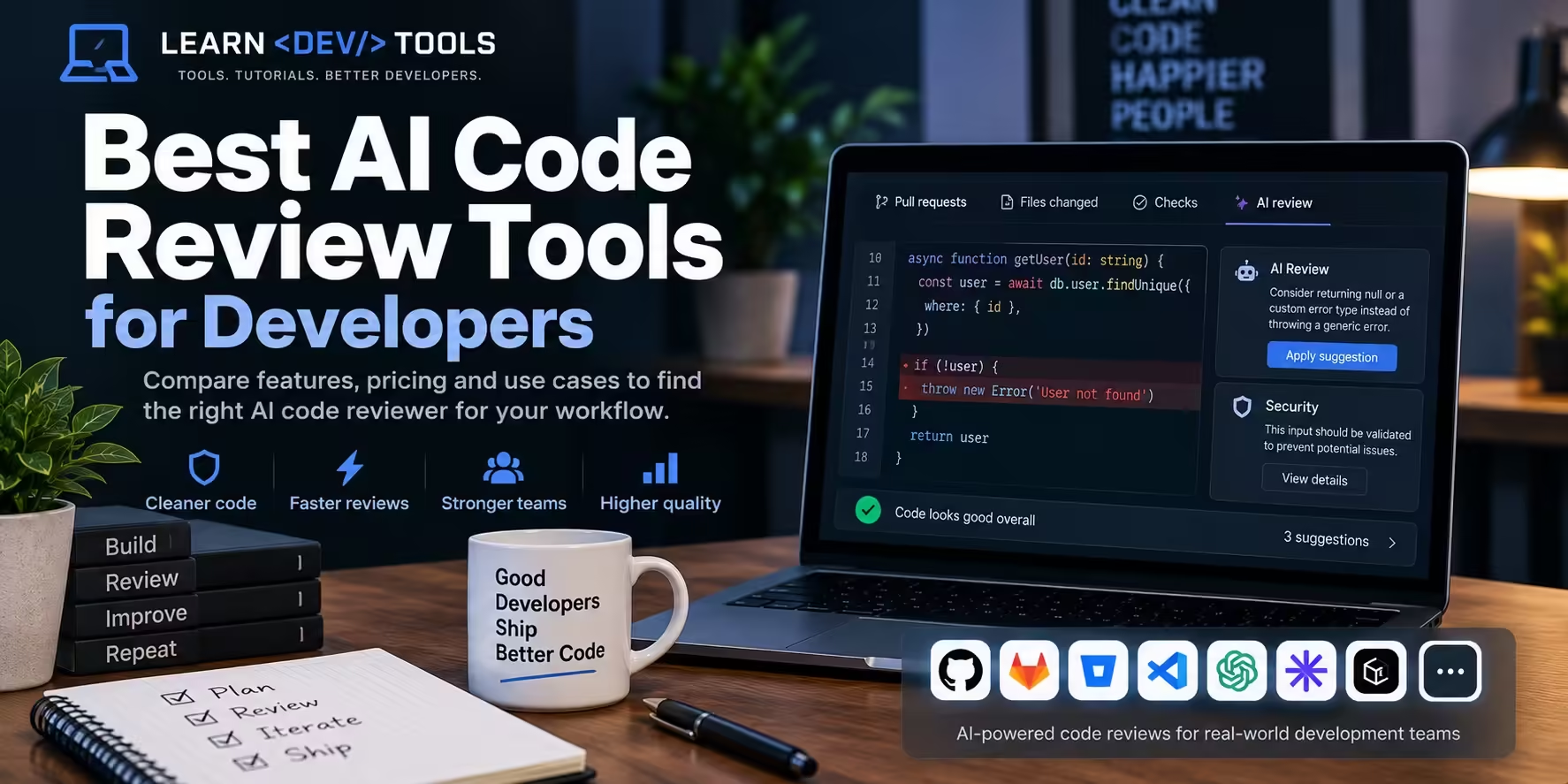
Choosing an AI code reviewer is less about which model sounds smartest and more about where the tool sits in your review loop. A useful reviewer needs enough repository context, comments at the right time, sane noise levels, rule controls your team will actually maintain, and pricing that still makes sense after you connect real repositories.
This guide is for developers and engineering leads shortlisting tools for pull requests, merge requests, security review and quality gates. The important split is simple: PR reviewers comment on changes, coding assistants add review features inside a broader dev environment, and static-analysis platforms enforce repeatable security or quality rules.
Quick Recommendations
- Strong first shortlist pick for hosted PR review: CodeRabbit if you want a mature dedicated reviewer across several Git platforms.
- Repository-context shortlist: Greptile if your reviews often depend on files outside the diff or a larger monorepo shape.
- GitHub-native shortlist: GitHub Copilot Code Review if your team already works inside GitHub and pays for Copilot.
- Security or static-analysis shortlist: SonarQube and Snyk Code, because they solve quality/security gates more directly than a chatty PR bot.
- Open-source/self-hosted shortlist: PR-Agent if you want deployment and model/API control.
- GitLab-native shortlist: GitLab Duo Code Review if merge requests, approvals and source control already live in GitLab.
Comparison Table
| Tool | Best for | Type | Git platforms | Repo context | Security/static analysis | Self-host/BYOK | Free option | Pricing model |
|---|---|---|---|---|---|---|---|---|
| CodeRabbit | Hosted PR review shortlist | AI PR reviewer | GitHub, GitLab, Bitbucket, Azure DevOps | Good | Limited; stronger on higher tiers | Enterprise | Yes | Per developer plus usage add-ons |
| Greptile | Large repos and monorepos | Repo-context reviewer | GitHub, GitLab | Very strong | Review-focused | Enterprise | Yes | Per seat plus credits |
| Qodo | Rules, tests and governed reviews | AI review platform | GitHub, GitLab, Bitbucket, Azure DevOps | Strong | Quality/rules focus | Enterprise options | Yes | Credit-based team pricing |
| GitHub Copilot Code Review | GitHub-native teams | Assistant review feature | GitHub; Azure DevOps preview | GitHub-native | Not a SAST replacement | GitHub controls | Plan-dependent | Copilot plans plus AI credits |
| Cursor BugBot | Cursor + GitHub teams | Assistant review feature | GitHub | Workflow-dependent | Bug-focused | Team/enterprise controls | No dedicated free plan verified | Usage-based runs |
| Graphite AI Reviews | Stacked PR and merge-queue teams | Review workflow layer | GitHub | Workflow context | Review-focused | Privacy controls | Yes | Per user |
| SonarQube | Quality gates and static analysis | Static-analysis platform | GitHub, GitLab, Bitbucket, Azure DevOps | Codebase analysis | Strong | Cloud/self-managed | Cloud/free and IDE options | LOC/year or cloud plan |
| Snyk Code | Security-first review | Security/SAST platform | PR checks, IDE, CLI, API | Security context | Strong | Enterprise controls | Yes | Per contributing developer |
| Bito | Cost-conscious multi-Git review | AI PR/IDE reviewer | GitHub, GitLab, Bitbucket | Codebase-aware | Some review/security signals | Higher tiers | Trial/free entry | Per seat plus reviewed lines |
| PR-Agent | Open-source and BYOK control | Open-source PR agent | Varies by setup | Setup-dependent | Review-focused | Yes | Yes | Infra/model costs |
PR Review, Coding Assistant, or Static Analysis?
A dedicated AI PR reviewer lives around pull requests or merge requests. It reads the diff, adds comments, suggests fixes and may enforce custom review rules. CodeRabbit, Greptile, Qodo, Bito and PR-Agent mostly belong here.
An AI coding assistant with review functionality is broader. GitHub Copilot Code Review and Cursor BugBot can help with review, but the real buying decision also includes your editor, Git platform, billing model and developer workflow. For broader generation and assistant trade-offs, see the Learn Dev Tools guide to AI coding assistants.
A static-analysis or security platform is different again. SonarQube and Snyk Code are strongest when you need repeatable quality gates, security scanning and policy enforcement. They can sit beside an AI PR reviewer, but they should not be judged only by whether they write conversational comments.
CodeRabbit
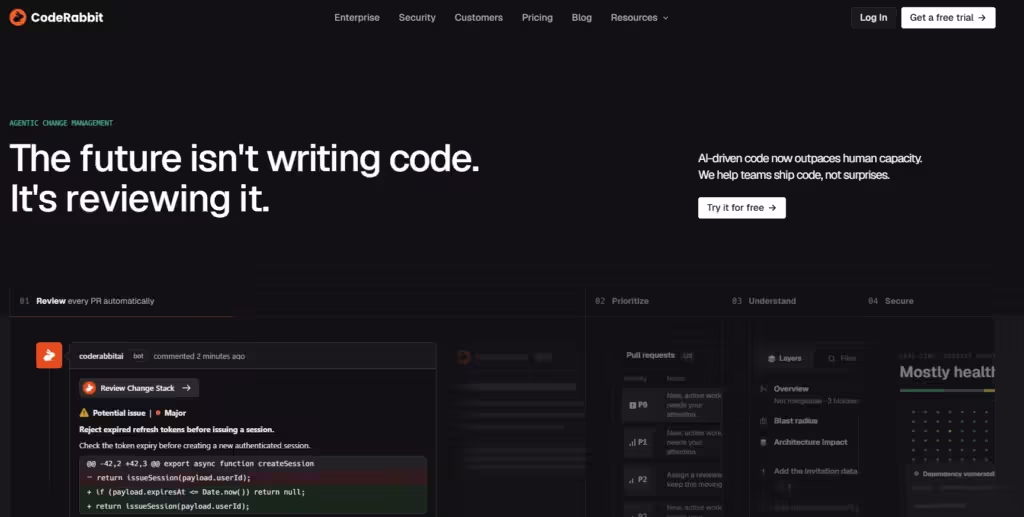
CodeRabbit is the first hosted PR reviewer I would put on many shortlists because it handles the boring parts teams care about: GitHub, GitLab, Bitbucket, Azure DevOps, enterprise Git setups, PR review limits, custom review behavior and higher-tier security review.
CodeRabbit now lists Free, Open Source, Essentials, Team, Advanced and Enterprise plans. Essentials is listed at $24 per developer per month annually or $30 month to month. Team is $48 annually or $60 month to month. Advanced is $90 monthly and adds continuous pull request security review, with AI Deep Scan billed separately. Free gives PR summaries, while paid plans unlock PR reviews and higher limits.
Its best fit is a team that wants a dedicated reviewer without building the plumbing itself. Validate review noise, rate limits and usage add-ons before a broad rollout, especially if your repos produce many small PRs or very large reviews.
Greptile
Greptile’s pitch is repository context. That matters when the risky part of a change is not visible in the diff: shared types, hidden call paths, a service boundary, or a monorepo dependency that a simple PR bot might miss.
Greptile starts with a free Starter tier for one active developer and monthly credits, then moves to Pro at $30 per seat per month with included credits. Enterprise teams can discuss self-hosted, Docker, Kubernetes and air-gapped deployment.
Shortlist Greptile when you suspect shallow diff comments are the real problem. The thing to validate is not whether it sounds confident, but whether its repository graph improves comments on your actual codebase and PR patterns.
Qodo
Qodo is strongest when review is part of a governed development process: rules, tests, review consistency and policy. It should not be confused with PR-Agent. Qodo is the commercial platform; PR-Agent is the open-source community project.
Qodo’s commercial review workflow is built around multi-agent review, rule enforcement and context-aware feedback. Pro Team is priced at $30 with credit-based usage, and the platform supports GitHub, GitLab, Bitbucket and Azure DevOps, with cloud, single-tenant, on-prem and air-gapped deployment paths.
Qodo makes sense when someone on the team will own rules and review policy. If nobody wants to tune guidelines, suppress noisy checks or decide what the bot should enforce, a simpler reviewer may age better.
GitHub Copilot Code Review
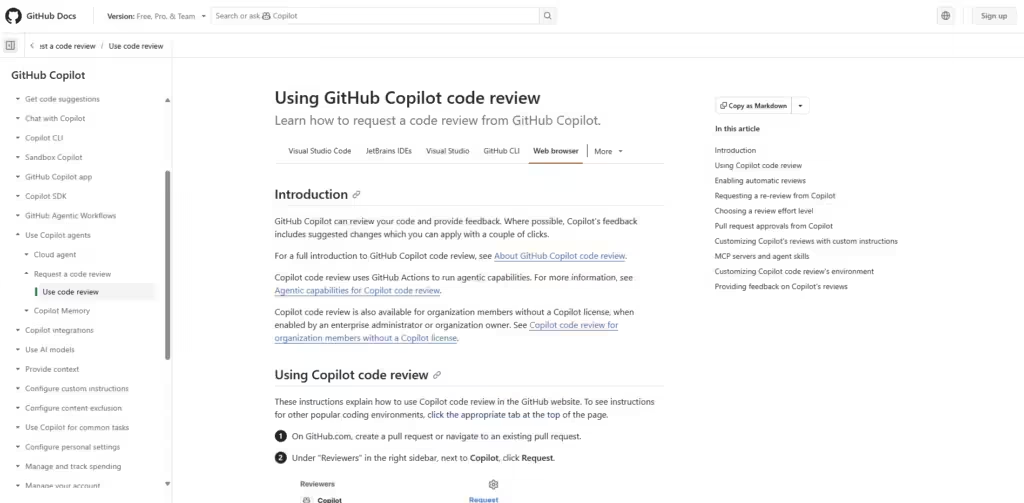
GitHub Copilot Code Review is mainly about native GitHub convenience. It keeps review inside the platform many teams already use, alongside Copilot Chat and coding assistance.
The pricing is not a clean seat-price comparison with a standalone PR bot. Copilot code review sits inside paid Copilot plans, uses AI credits, and agentic review can also consume GitHub Actions minutes.
It belongs on the shortlist for GitHub-centric teams that already pay for Copilot. It is harder to justify as the deepest independent reviewer or as the right answer for teams that need GitLab, Bitbucket or Azure DevOps as first-class review surfaces.
Cursor BugBot

Cursor BugBot is most relevant when Cursor and GitHub are already part of the team’s daily loop. It reviews PRs in that ecosystem rather than trying to be a neutral multi-platform review layer.
Cursor changed BugBot pricing in 2026 from a separate seat subscription to usage-based billing. Run cost depends on PR size and complexity, so teams should model costs from their own PR volume instead of treating BugBot like a fixed subscription.
Pilot BugBot if your developers already trust Cursor and want review help around GitHub PRs. Skip it as a first choice if you need multi-Git support, formal security gates or predictable per-seat review budgets.
Graphite AI Reviews

Graphite AI Reviews is less compelling as a standalone bot and more compelling inside Graphite’s broader stacked-PR and merge-queue workflow. If Graphite already manages review flow, AI comments land where developers are already working.
Graphite has Hobby, Starter and Team plans, with Team including unlimited AI reviews alongside workflow features such as merge queue and automation. The AI review flow is tied to Graphite Agent commenting on PRs and adapting from feedback.
Evaluate Graphite when review operations are the bottleneck: stacked changes, merge timing, queue discipline and reviewer routing. If you only want a cross-platform code reviewer, it is not the most direct purchase.
SonarQube
SonarQube earns its place here because many teams searching for AI code review are actually trying to enforce reliable quality gates. It is not a substitute for a PR discussion, and that is the point: it is more deterministic than a comment bot.
SonarQube Server pricing is based on instance and lines of code. Developer Edition includes AI Code Assurance and broad language analysis; Enterprise adds AI CodeFix. SonarQube Cloud uses separate Free, Team and Enterprise subscriptions.
Use SonarQube for maintainability, reliability, security rules and CI/CD gates. Add a PR reviewer beside it if your team also wants contextual review comments, generated fixes or earlier feedback before CI finishes.
Snyk Code
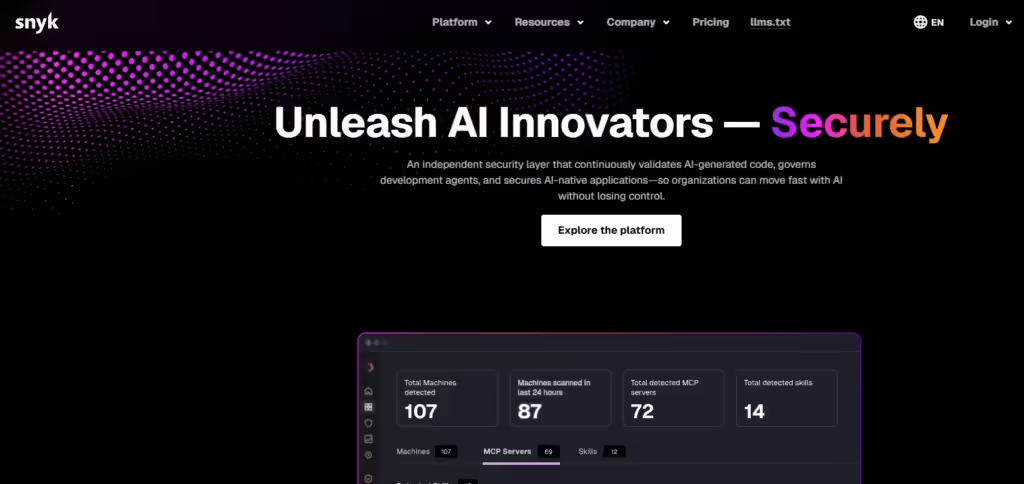
Snyk Code is the security-first pick. It belongs in the review conversation because vulnerabilities and risky data flows often need to appear during development, not after release.
Snyk has a Free plan and paid plans starting from Team at $25 per contributing developer per month. Snyk Code brings AI-based SAST into IDE, CLI, API and pull-request workflows.
Use Snyk Code when the review problem is security. Pair it with an AI PR reviewer if you still need architecture, readability or refactor comments. Do not expect it to replace human review or a general-purpose PR bot.
Bito
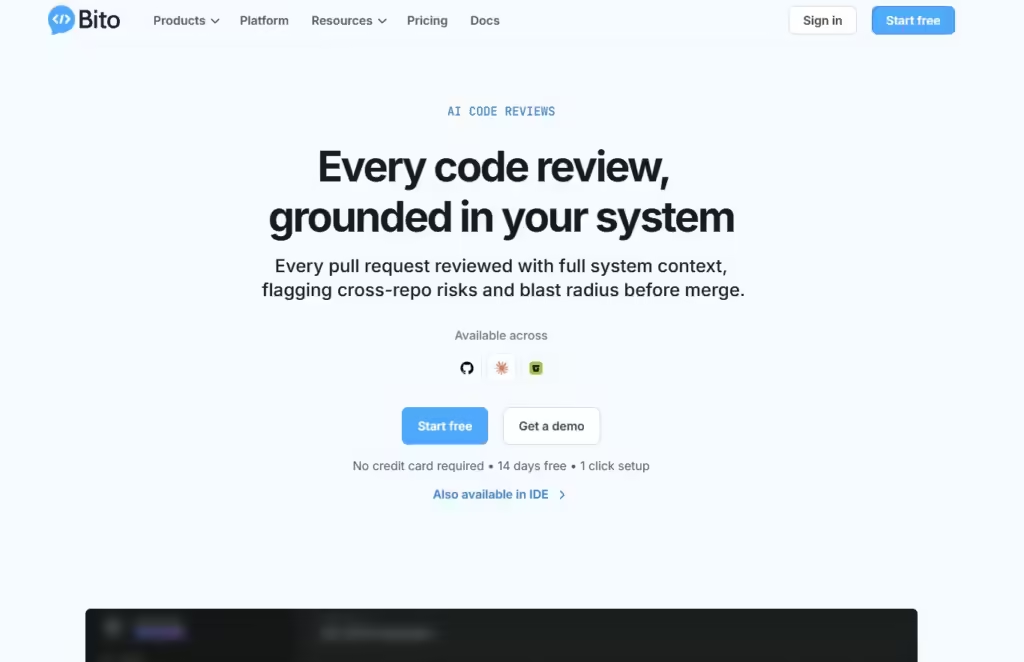
Bito is a practical shortlist option for teams that want AI code reviews across Git and IDE workflows without starting at enterprise pricing. It supports GitHub, GitLab and Bitbucket review flows, plus IDE review in VS Code, JetBrains IDEs, Cursor and Windsurf.
Bito’s AI Code Reviews Team plan is $12 per seat per month annually or $15 monthly, while Professional is $20 annually or $25 monthly. Both include a reviewed-line allowance, with extra reviewed lines billed separately. Higher tiers add hosted, self-hosted and on-prem options.
The differentiator is practical coverage at a lower entry price. The adoption risk is the same as any reviewer: if comments are too broad or the reviewed-line allowance does not match your PR volume, the cheap-looking plan can become the wrong plan.
PR-Agent
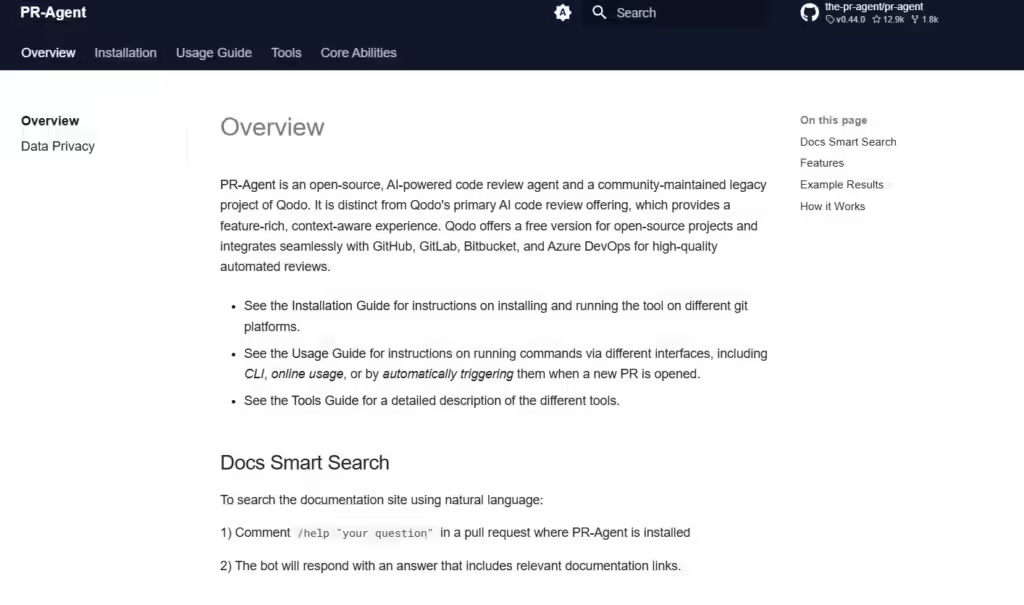
PR-Agent is the clearest open-source starting point for teams that want control over hosting and model choice. It is not the same thing as Qodo’s commercial platform, even though Qodo maintains the broader product family around it.
PR-Agent can run through CLI, online usage and automated PR triggers. The software may be open source, but the total cost includes infrastructure, model/API usage and maintenance. If you are comparing model providers for a BYOK setup, this AI APIs guide can help with that part of the decision.
PR-Agent is worth piloting when control matters more than polish. It is harder to justify when the team needs vendor support, admin dashboards, audit controls and a low-maintenance rollout.
Sourcery
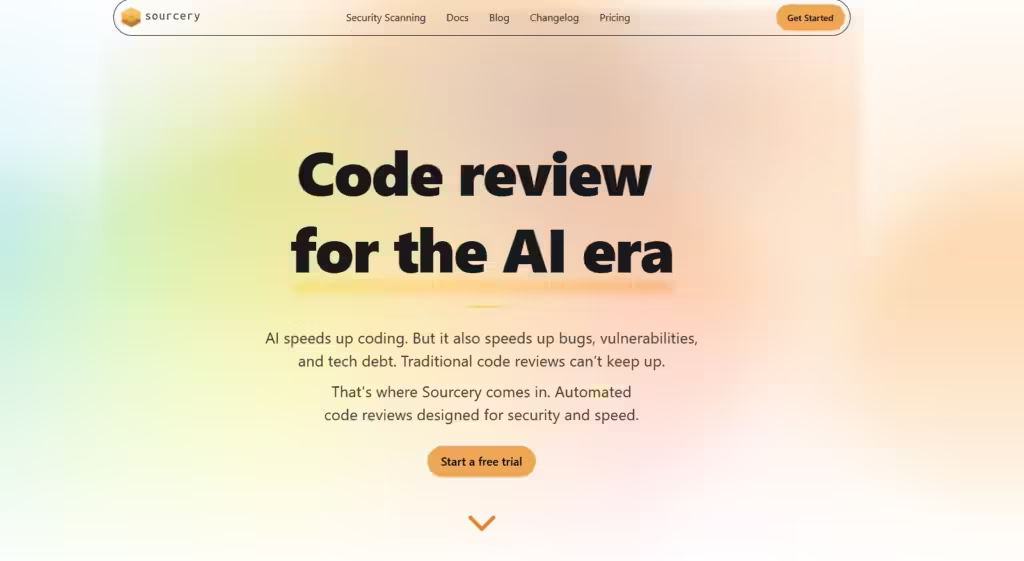
Sourcery is a lighter commercial reviewer for teams that want PR comments, refactoring feedback and security scanning without adopting a broad engineering platform. It works with GitHub, GitLab, GitHub Enterprise Server and self-hosted GitLab, plus IDE and API workflows.
Sourcery’s GitHub Marketplace pricing includes an open-source plan, Pro at $15 per seat per month and Team at $30 per seat per month. Code sections may be sent to OpenAI for review, so privacy-sensitive teams should inspect those terms before connecting private repositories.
It is a reasonable pilot when you want a lower-friction reviewer and its language/support model fits your stack. If you need deep enterprise policy, multi-repo governance or a dedicated security program, look elsewhere first.
GitLab Duo Code Review
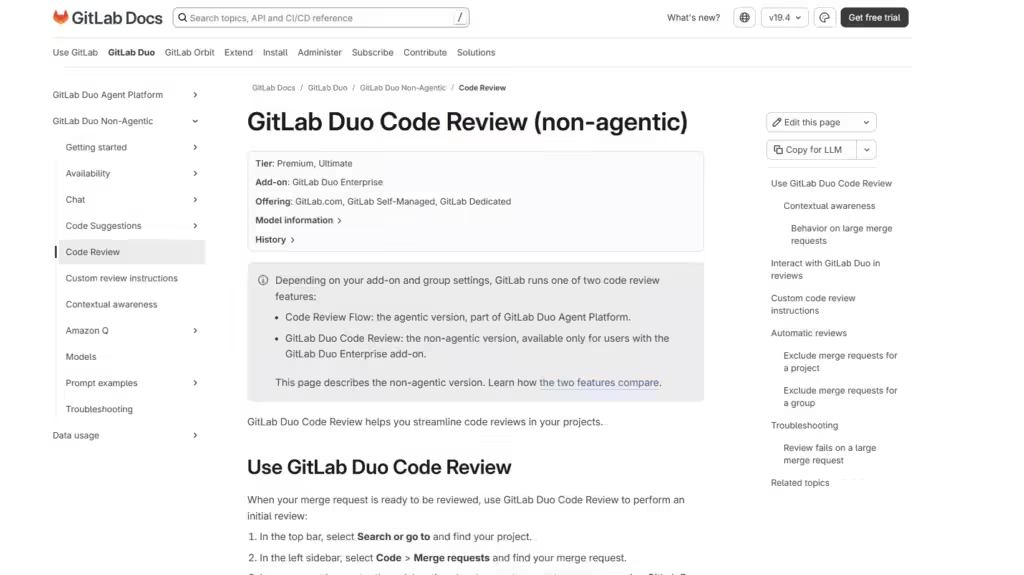
GitLab Duo Code Review should stay in the full list because GitLab teams do not necessarily want another review surface. Its strongest case is native merge-request review inside GitLab.
GitLab Duo Code Review is available for Premium and Ultimate with the GitLab Duo Enterprise add-on across GitLab.com, Self-Managed and Dedicated. It supports custom instructions and automatic review configuration, and large merge requests can fall back to reduced context.
Shortlist it if source control, code review and approvals already live in GitLab. Compare standalone tools if you need cross-platform review or simpler pricing outside GitLab Credits and add-on requirements.
Also Consider
Claude Code Review is worth evaluating for deeper GitHub/code-analysis workflows, but its positioning and token-billed review estimates make it different from a lightweight always-on PR-review bot.
Amazon Q Developer is most relevant for AWS-heavy teams. Its GitHub PR review integration is still preview, and AWS has IDE-support timeline caveats, so treat it as ecosystem-specific rather than a general default.
Codacy is credible for code-quality and security automation with AI PR feedback. It is less focused as a pure AI PR reviewer than CodeRabbit, Greptile, Qodo or Bito.
Selection Is Only Half the Work
The tool choice matters, but rollout discipline matters more. A reviewer that posts too many low-value comments teaches developers to ignore it. A reviewer with no owner slowly turns into another noisy CI check.
- Noise: suppress comments that repeat linting, formatting or static-analysis checks already enforced in CI.
- Trust: make it clear that AI comments are suggestions, not authority. Human reviewers still own architecture, product intent and final approval.
- Policy ownership: assign someone to maintain review rules, exclusions and suppression patterns.
- Overlap: decide whether the AI reviewer complements SonarQube, Snyk, linters and tests, or merely repeats them.
- Pilot first: start with representative repositories and PRs before enabling the reviewer everywhere.
Which Tool Should You Pilot?
- Solo developer: start with PR-Agent if you want control, Bito if you want a hosted low-cost reviewer, or Copilot Code Review if Copilot is already part of your GitHub workflow.
- GitHub-centric small team: compare CodeRabbit, GitHub Copilot Code Review and Cursor BugBot on the same recent PRs.
- Large repository or monorepo: compare Greptile and Qodo with CodeRabbit’s linked-repository features.
- Security-heavy team: evaluate Snyk Code and SonarQube first, then add a PR reviewer if you need contextual comments.
- Enterprise/privacy-sensitive team: focus on tools with self-hosted, on-prem, air-gapped or clear data-retention controls: Greptile, Qodo, CodeRabbit Enterprise, Bito Enterprise, SonarQube and PR-Agent.
- Open-source/BYOK team: begin with PR-Agent, then decide whether maintaining the setup is worth the control.
A Practical Pilot Checklist
- Pick five to ten representative PRs: small fixes, risky refactors, test changes, dependency updates and one messy real-world change.
- Separate useful findings, noisy comments and missed issues.
- Check whether the tool understands code outside the diff when the change requires it.
- Measure whether comments arrive early enough to influence the author before human review is already done.
- Confirm data retention, model-training, self-hosting and compliance requirements before connecting private repositories.
- Compare pricing against real usage: seats, credits, reviewed lines, per-review billing or lines of code.
- Ask reviewers whether the tool changed their decision or just added more notification noise.
FAQ
Can AI code review replace human review?
No. It can catch repeatable issues and give earlier feedback, but humans still own architecture, product intent, maintainability and final approval.
Should I use SonarQube or Snyk instead of an AI PR reviewer?
Use SonarQube or Snyk when you need static analysis, quality gates or security scanning. Use an AI PR reviewer when you want contextual comments on code changes. Mature teams may need both.
What is the best self-hosted AI code review option?
PR-Agent is the clearest open-source starting point. Greptile, Qodo, CodeRabbit Enterprise and Bito Enterprise also document self-hosted or on-prem options, usually for enterprise buyers.
What should I check before enabling review on private repositories?
Check what code is sent to the service, whether it is stored, whether it can train models, whether review data is cached, which subprocessors are involved and whether self-hosted controls are available.
Bottom Line
Shortlist by workflow first: PR review, repository context, GitHub or GitLab-native review, security/static analysis, or self-hosted control. Then run the finalists on representative PRs and score useful findings, noise, integration fit, privacy requirements and real cost. Roll out only after developers trust the comments enough to keep reading them.